If you've ever touched your roof on an August afternoon in Houston, you already know the truth: your roof takes the full force of the Texas sun every single day. What most homeowners don't realize is that the color of that roof can change its surface temperature by 50 degrees or more — and that difference shows up on your energy bill, in your attic, and in how long your shingles actually last.
After installing and replacing roofs across the Houston, Sugar Land, and The Woodlands area, here's the question we get every summer: "What's the best roof color to keep my house cool?" This guide breaks it down the way we'd explain it to a neighbor — what the science actually says, which colors perform best, and how to balance heat performance with curb appeal.
Yes — and not by a little. According to the U.S. Department of Energy, a conventional dark roof can reach 150°F or more on a sunny summer afternoon, while a reflective roof under the same conditions can stay more than 50°F cooler (DOE: Consumer Guide to Cool Roofs). The principle is the same reason you reach for a white t-shirt instead of a black one in July: light colors reflect sunlight, dark colors absorb it.
That absorbed heat doesn't just sit on the surface. It radiates down into your attic, drives up your attic temperature, and forces your air conditioner to work harder. In a climate like ours — where 95°F+ days stack up for months — that adds up fast. (We dig deeper in our post on how your roof affects your energy bill in Houston.)
Bottom line: A lighter, more reflective roof runs cooler, eases the load on your A/C, and can extend the life of your roofing materials by reducing heat-related wear.
Here's the nuance most homeowners miss: two roofs that look the same color can perform very differently in the heat. What really matters is a property called solar reflectance — how much of the sun's energy a material bounces back instead of soaking up.
The Department of Energy notes that white roofing products stay coolest, reflecting about 60–90% of sunlight. But manufacturers can also make darker shingles perform better using special "cool-colored" pigments that reflect invisible near-infrared light — these typically reflect 30–60% of sunlight, far more than a standard dark shingle. That's why you'll sometimes see two charcoal-gray shingles where one is rated as a "cool roof" and the other isn't.
To compare actual rated products, the independent Cool Roof Rating Council's Rated Products Directory lists the solar reflectance for thousands of roofing materials. For a quick primer, see our post on the impact of UV rays on your roof.
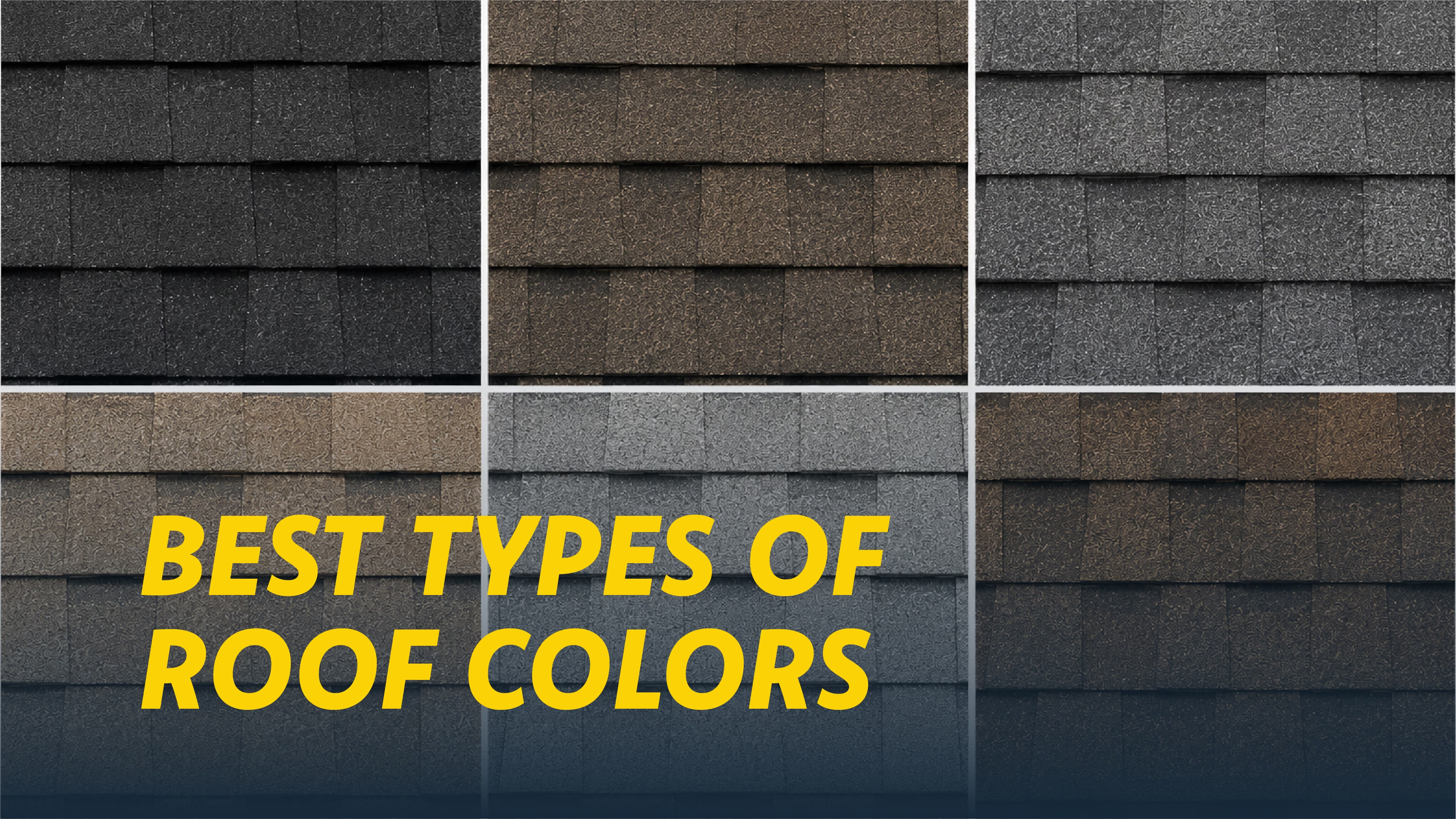
Here's how the most common shingle colors stack up for our climate, from coolest to hottest. Reflectance figures are approximate ranges based on Department of Energy guidance — exact numbers vary by manufacturer and product line.
| Roof Color | Heat Performance | Approx. Solar Reflectance | Best For |
| White / Very Light | Coolest | ~60–90% | Maximum energy savings; flat/low-slope roofs |
| Light Gray, Beige, Tan, Sand | Excellent | ~35–55% | The sweet spot for most Houston homes |
| Medium Gray, Driftwood, Weathered Wood | Good | ~25–40% | Curb appeal with solid heat performance |
| "Cool-Colored" Dark Shades | Moderate (much better than standard dark) | ~30–45% | A dark look with a cooler attic |
| Standard Black, Charcoal, Dark Brown | Hottest | Often under ~20% | Cooler climates; not ideal for Texas sun |
For most homes in the Houston metro, a light-to-medium gray, tan, or beige hits the sweet spot — noticeably cooler than dark shingles, while still looking sharp on the street. If your heart is set on a darker roof, ask specifically for a cool-colored / reflective version of that shade.
We get it — a deep charcoal or black roof looks striking, and it's a popular choice. You're not doomed if you go dark, but go in with eyes open. Dark roofs absorb the most heat, which is exactly what you don't want in Texas. (We answer this head-on in are black roofs hotter?)
If you want the darker look without the full heat penalty:
Not sure which shade fits your home and HOA? Browse our roof color and shingle options, or read how to choose the right shingle color for you.
Color is only half the story. The material underneath plays a big role in how much heat reaches your living space:
Want to weigh your options? Start with our roof types overview.
The honest answer: it depends on your home's insulation, attic ventilation, A/C efficiency, and how much direct sun your roof gets. But the Department of Energy is clear that a cooler roof can reduce air-conditioning demand, help an aging A/C keep up, and may extend the service life of the roof by cutting heat-related wear. In a place where the cooling season runs most of the year, those benefits compound season after season.
Watch for algae streaks on lighter roofs. In our warm, humid climate, dark algae growth (those ugly black streaks) tends to show up more on light-colored roofs. The fix is simple: choose algae-resistant shingles with copper-bearing granules. More in what causes those ugly black streaks on my roof and how to prevent algae on your roof.
Check your HOA rules. Many Sugar Land and Woodlands neighborhoods have approved color palettes — confirm before you fall in love with a shade.
Don't forget ventilation. Even the best roof color underperforms over a hot, poorly ventilated attic. Color and ventilation work as a team.
White and very light shades stay coolest, reflecting roughly 60–90% of sunlight. For most homes, a light gray, tan, or beige offers the best balance of heat performance and curb appeal.
Standard dark roofs absorb the most heat and can reach 150°F+ in full sun. If you want a dark look, ask for a "cool-colored" reflective version and pair it with good attic ventilation.
In a hot climate like Houston's, a more reflective roof reduces the heat entering your attic, which eases the load on your air conditioner. Actual savings depend on insulation, ventilation, and A/C efficiency.
Usually no — when you're already replacing your roof, cool-rated colors and materials typically cost about the same as conventional ones. The smart time to upgrade is during a planned replacement.
Sugar Roofing helps homeowners across Houston, Sugar Land, and The Woodlands choose roofs built for Texas heat. Get your free estimate, or see the communities we cover on our service areas page.
