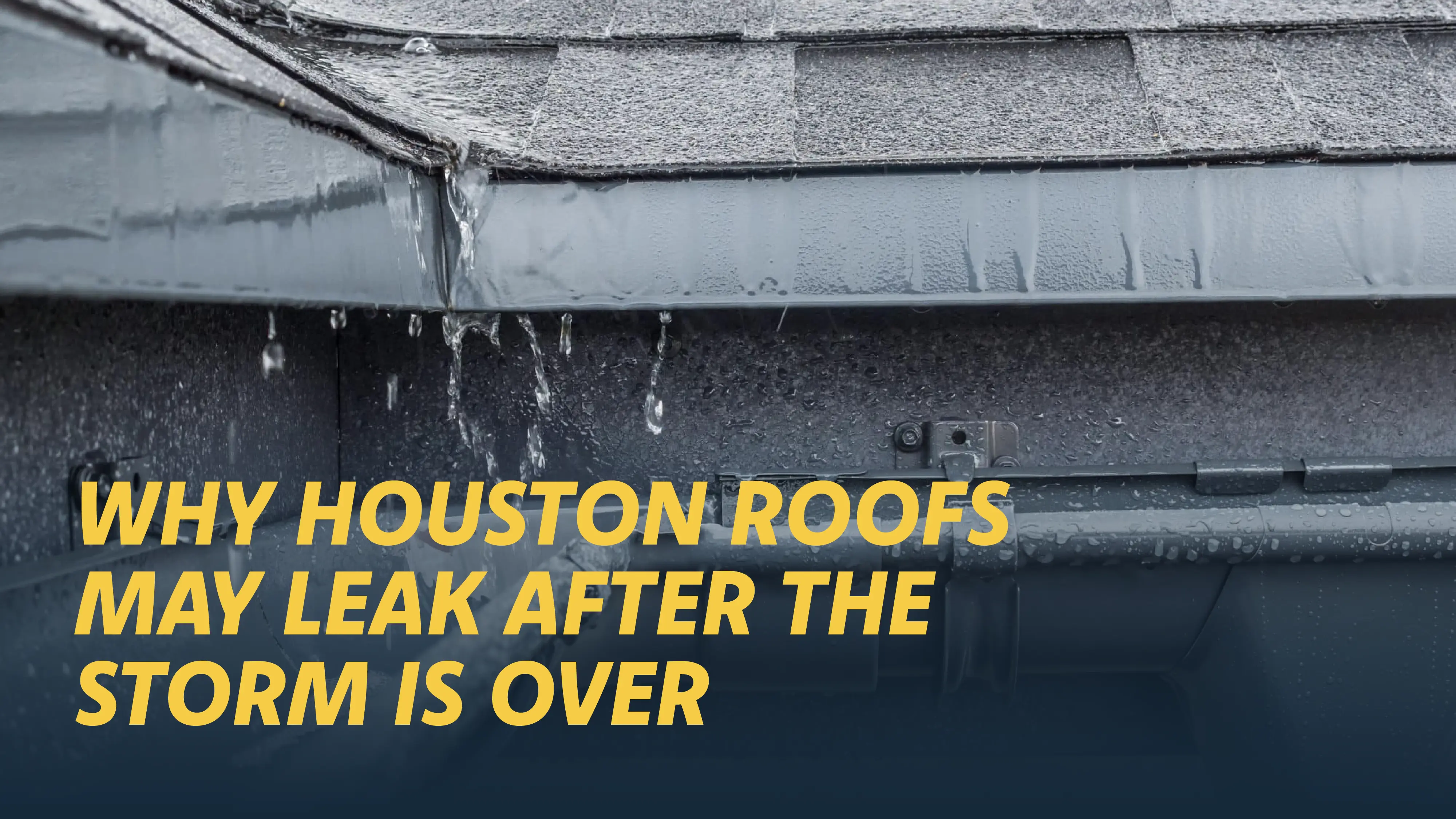
The storm has passed. The skies are clear. Your roof looks fine from the driveway.
Then a few days later, you notice a brown stain spreading across your ceiling.
Sound familiar?
Many homeowners expect roof leaks to happen during a storm, but that's not always the case. In many situations, the damage happens during the storm while the leak doesn't become noticeable until days—or even weeks—later.
Understanding why that happens can help you catch problems earlier and avoid more expensive repairs.
A roof leak doesn't always happen the moment a shingle comes loose.
Instead, storms often create small openings that allow water to slowly work its way beneath the roofing materials. It may take another rainfall—or simply enough trapped moisture—for the first signs of a leak to appear inside your home.
That's why many homeowners are surprised when a leak shows up long after the weather has cleared.
The damage often happens during the storm. The leak is simply the last thing to appear.
Many people imagine a roof leak as water dripping straight through the ceiling.
In reality, water often travels before it becomes visible.
Once it gets beneath the shingles, moisture can move along the roof deck, rafters, or insulation before finally finding a way into your home. That means the stain on your ceiling may be several feet away from where the leak actually started.
Some of the most common entry points include roof valleys, vents, chimneys, skylights, and other roof penetrations. These areas rely on properly installed flashing to keep water out. If you'd like to learn more, check out our guide on What Is Roof Flashing?
Living in the Greater Houston area means your roof experiences more than just the occasional storm.
Heavy rain is often followed by intense sunshine, high humidity, and long stretches of summer heat. These conditions continue to stress roofing materials long after the storm has passed.
Heat can dry out shingles, humidity can slow the drying process, and repeated weather cycles gradually wear down the roof's ability to keep water out.
That's one reason a small issue from one storm can become a much larger repair after several weeks of changing weather.
Most major roof leaks don't begin as major problems.
A single lifted shingle, a small puncture from hail, or loose flashing may seem harmless at first. But every rainfall gives water another opportunity to work its way into the roofing system.
Over time, that moisture can lead to:
The longer moisture remains trapped, the more extensive the repairs may become.
Finding a leak after a storm doesn't automatically mean you need a new roof.
In many cases, a localized repair is all that's needed. However, if your roof is older, has experienced repeated storm damage, or has developed leaks in multiple areas, replacing it may be the better long-term investment.
Not sure which option makes sense? Our guide on When to Replace or Repair Your Roof for Houston Homeowners walks through the factors that can help you decide.
Some roof leaks are obvious.
Others start with subtle warning signs that are easy to overlook.
Watch for:
Even if these signs seem minor, they're worth paying attention to. Small leaks rarely stay small for long.
A roof leak usually starts long before water drips from the ceiling.
Catching storm damage early gives you a better chance of fixing a small issue before it turns into a larger repair. Whether you've noticed a new water stain or simply want peace of mind after severe weather, taking action sooner is almost always easier than waiting.
If you think your roof may have been affected, learn more about our Roof Leak Repair services and how we help homeowners across the Greater Houston area.
Storms can create small openings that allow water beneath your roofing materials. It may take another rainfall—or time for moisture to travel through the roof system—before a leak becomes visible inside your home.
Yes. Lifted shingles, damaged flashing, loose seals, or small punctures from hail can all allow water into your roof without obvious damage from the ground.
Any new ceiling stain, damp attic insulation, peeling paint, or musty smell after rain should be investigated. Even small leaks can become more expensive if left untreated.
Absolutely. Many roofing problems develop gradually. The storm creates the damage, but the signs often don't appear until later when water has had time to work its way through the roofing system.
