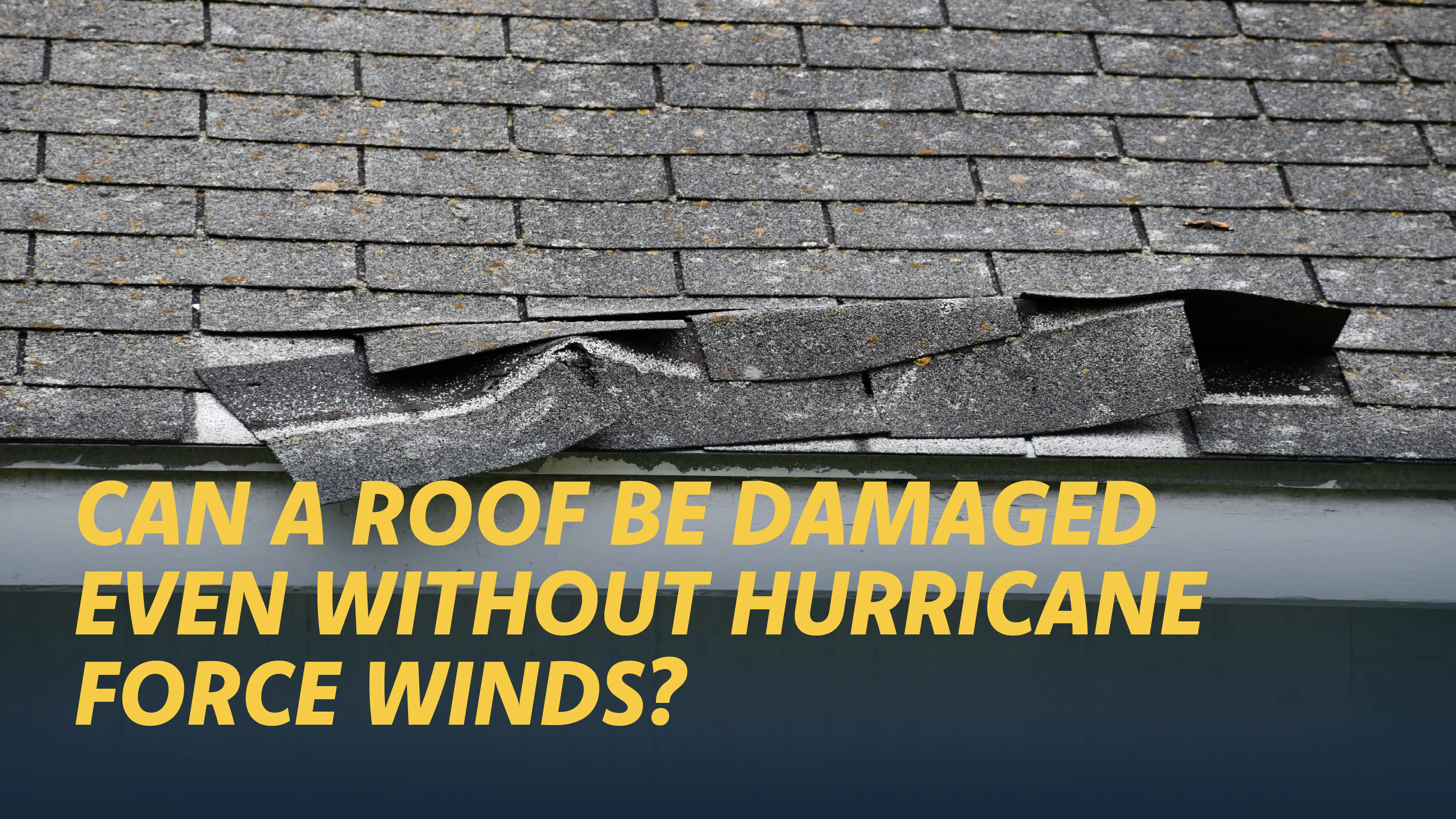
When people think about roof damage, they usually picture hurricanes ripping shingles off homes or entire roofs being torn apart by extreme winds.
But here's something many homeowners don't realize. Your roof doesn't need to experience hurricane-force winds to suffer damage.
In fact, some of the most common roofing problems begin after ordinary thunderstorms, strong wind gusts, or repeated seasonal storms. The damage may be so subtle that you don't notice anything until weeks—or even months—later, when a leak finally appears.
While stronger winds generally create more damage, a roof's condition matters just as much as the weather itself.
An older roof with worn shingles may struggle against wind speeds that a newer roof handles without issue. Previous repairs, aging materials, poor installation, and even the direction the wind hits your home can all influence whether damage occurs.
That's why two neighboring houses can experience the same storm but end up with very different outcomes.
A roof doesn't have to lose shingles to be damaged. Sometimes the warning signs are small enough that they're only discovered during an inspection.
Wind doesn't always rip shingles completely off the roof.
More often, it begins by lifting the edges of shingles. Repeated gusts can weaken the seal holding them in place, allowing them to shift, curl, or crease over time. Once that protective seal is compromised, future storms can cause the damage to spread much more easily.
Other roofing components can also be affected, including ridge caps, gutters, vents, and exposed fasteners.
Here's a general idea of how different wind conditions may affect a roof.
The good news is that catching these issues early through a professional roof inspection often makes repairs much simpler and less expensive.
Not every roof responds to wind the same way.
As roofing materials age, they naturally become more brittle after years of exposure to heat, sunlight, rain, and changing temperatures. Shingles may lose protective granules, adhesives become weaker, and small cracks can begin to form.
That means a storm that causes no visible problems on a five-year-old roof could loosen materials on a roof that's twenty years old.
This is one reason roof inspections become increasingly important as a roof approaches the end of its expected lifespan.
Roof damage is often cumulative.
Imagine a thunderstorm lifts the corner of one shingle without tearing it off. Everything still looks normal from the ground, so the damage goes unnoticed.
A few weeks later, another storm pushes rain beneath that lifted edge. Moisture reaches the roof deck and begins soaking into the underlying materials.
Over time, repeated exposure can contribute to wood rot, mold growth, insulation damage, or even interior ceiling stains.
Instead of one severe storm causing the problem, it is often several smaller storms working together.
Wind rarely acts alone.
During many Texas storms, strong gusts are accompanied by hail and airborne debris that can damage roofing materials even further.
Hail may bruise asphalt shingles, knocking away protective granules that shield the roof from sunlight and weather. Tree branches, loose fencing, or other debris can crack shingles, dent metal roofing, or damage gutters.
Some of this damage is obvious. Other times, it leaves behind small weaknesses that continue to worsen long after the storm has passed.
Wind damage can be easy to miss, especially when the roof still looks normal from the ground.
Small gaps may form along roof edges, valleys, vents, chimneys, or other areas where roofing materials meet. These openings may not cause a leak immediately, but they can give water a way in during the next storm.
Once water gets beneath the surface, it can travel along the roof deck before showing up inside your home. That means a ceiling stain may appear far from the actual source of the problem.
Roofers check more than just missing shingles. They also look at seals, fasteners, edges, and transition areas where hidden damage often begins.
Want to know more about one of those key transition areas? Read our What Is Roof Flashing? guide.
Even if your roof looks fine from the ground, it's worth taking a few minutes to look for warning signs after severe weather.
Some common things to watch for include:
Not sure whether your roof made it through the latest storm? Learn more about our storm damage services, or check whether Sugar Roofing serves your area.
Yes. While newer roofs often withstand these winds without major issues, older roofs or roofs with existing wear may experience lifted shingles, loose flashing, or minor damage.
Yes. Wind can weaken the adhesive seal beneath shingles without completely removing them. The damage may not become visible until another storm passes through.
Absolutely. Water may travel beneath roofing materials before showing up as a ceiling stain or leak, which is why storm damage isn't always immediately obvious.
